Ingredion Offers ‘Clean Label’ Solutions

Share:

by Terrie Ellerbee/associate editor

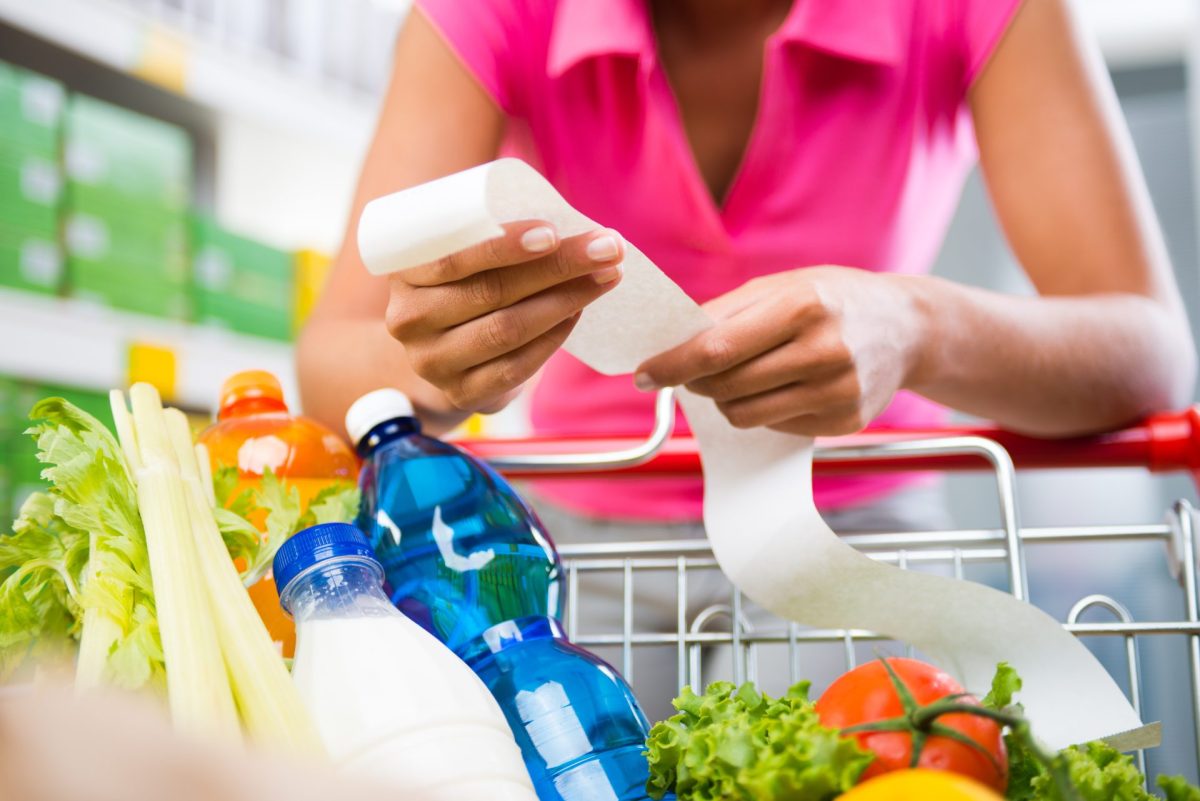
Simple, real, pure, 100 percent natural. These are keywords consumers are looking for more often when they purchase consumer packaged goods, and 58 percent of U.S. consumers say they usually or always read ingredients lists on packaging.

Manufacturers, retailers and marketers are working to simplify the lists by replacing some ingredients with more natural alternatives.

This was the basis of a presentation by Leaslie Carr and Evan Hyman of Ingredion, a company that provides ingredients and “clean label” solutions. They spoke to attendees at the Federated Foods 2012 Summer Buying Show, held in Chicago July 22-24.

What does ‘clean label’ mean?

Ingredion coined the term “clean label,” which is now widely used in the industry, to describe ingredients free from chemical additives that result in lists on packaging that are easier to understand.

“One of the things that we do as a company is work with food manufacturers and help them formulate clean label ingredients and simplify the ingredients,” said Carr, who is marketing manager for the Wholesome Springboard for North America at Ingredion.

Ingredion offers a portfolio of clean label ingredients, focused on starches, but recommends other ingredients in its holistic approach to clean label formulation.

“If you talk to food scientists in product development, they will tell you that getting rid of emulsifiers is one of the more challenging things on a food label, and flavor enhancers such as MSG also are more challenging,” she said. “But when it comes to say, color, flavor and texture, those are probably the easier areas to work in when changing products to clean label.”

She used the example of a salad dressing that started with a long ingredients list and contained four items in need of replacement: the texturizer (modified food starch), an antioxidant (EDTA/ethylenediaminetetraacetic acid), a preservative (potassium sorbate) and a flavor enhancer (MSG).

“We were able to formulate a product that has a cleaner label … We replaced modified food starch with corn starch, MSG with a natural flavor enhancer, the potassium sorbate with cultured dextrose and the EDTA with rosemary extract,” Carr said. “Now those ingredients one would argue are easier to recognize for a consumer.”

There is no definition of “natural” regarding consumer packaged goods and no regulation or oversight of the use of the word, so the salad dressing now could be labeled “made with all natural ingredients” or “no additives or preservatives.”

Changing the ingredients doesn’t mean necessarily that the resulting product will, for example, has less fat or lower sodium. It just means that ingredients perceived as bad are replaced with more natural alternatives. In the case of the salad dressing, the nutritional value of the product as a whole was unchanged, so the nutrition facts panel on the packaging did not change.

A pure and simple growing trend

Research firm Mintel reports that “pure is the new natural.”

Pure and simple will be seen on more and more products coming into the marketplace, Carr said. Consumers are seeking products with fewer and easier-to-understand ingredients.

In response, the word “simple” or a variation of it, is appearing more often food packages.

Kroger has embraced the position with its Simple Truth line. A complete and extensive list of ingredients that are not allowed in products in the natural and organic line is available to consumers on the company’s website.

“They’re very, very specific, and, interestingly, this is really defined by the retailer,” said Hyman, who is the business development manager for private label at Ingredion.

Safeway has taken the same approach category by category with its Open Nature line and now offers meat, dairy, deli, frozen, bakery and pantry items. On its website, the company has a glossary of natural ingredients, some of which may be new to consumers. It includes products from allspice to xanthan gum. Descriptions explain where the ingredient came from and how it is used. For example, Oleoresin of paprika is the evaporated oil of sweet red peppers dissolved in an alcohol base. It is orange to red in color and commonly used to add color or flavor to sausages, dressings and snack food seasonings.

Some retailers have taken the pure, natural and organic concept to such a level that no products are allowed on their shelves if they contain certain ingredients perceived as bad.

Whole Foods Market has a list of unacceptable ingredients on its website and Earth Fare has a “Boot List.” Both retailers prohibit products if they contain ingredients like high fructose corn syrup, hydrogenated oil or artificial fat, colors or flavors.

Demand for clean label products grows

“In terms of the market size … the retail market for natural and organic foods is valued at over $39 billion, and it’s expected that number will double by 2015, so there will be closer to an $80 billion market by 2015,” Carr said. “Over the last five years … on average, 30 percent of total new products launched have some sort of clean label positioning. It could have been natural, it could have been organic or simply no additives or preservatives. So there’s a lot of activity when it comes to new products that are being launched in the marketplace.”

She said that more than one-third of the natural and organic offerings today are in fresh produce, followed by dairy, beverage and packaged foods. Growth is occurring in a wide variety of segments, including ready meals, sauces and seasonings, soft drinks, soups and baby food.

“Anyone have pets? You know there is a lot of focus on feeding your pets natural food or even raw food,” Carr said.

It is the number one category as far as the number of new clean label products introduced.

What is the opportunity for private brands?

There is opportunity for on-trend innovation in private label, Hyman said.

“This natural, simple or pure positioning … I think—it’s really a matter of time—that it’s going to start crossing over to the national brand equivalent,” Hyman said.

Ingredion can help not only by providing ingredients, Hyman said, but also by offering an overall holistic perspective.

“We’re an ingredient company, hence our name, but we work with retailers and manufacturers to help develop private brand programs,” he said. “What we see is that retailers and manufacturers are really continuing to collaborate with ingredient suppliers—because they can’t do it by themselves—to help formulate clean label products, because there are inherent challenges … That’s where we come into play.”

In 2010, Ingredion did a proprietary attitude and usage study and found that a majority of consumers would be willing to pay more for a product that claims to be natural or organic, especially in categories like frozen food, yogurt and canned soup.

“This is about what resonates with the consumer,” Hyman said. “Ingredient solutions. It’s not about selling ingredients, so to speak. It’s about solutions.”

For more information, go to www.foodinnovation.com

In the feature photo at top: Evan Hyman and Leaslie Carr of Ingredion field questions at the Federated Foods 2012 Summer Buying Show held in Chicago. Their presentation was entitled: “Formulating for Clean Label Success.”

Share: